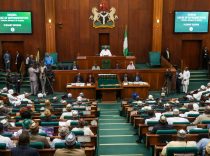

The House of Representatives on Wednesday, 10 June 2026 passed a bill seeking to alter the Constitution of the Federal Republic of Nigeria, 1999 (as amended) to provide for the establishment of State Police, while the Senate, considering the same proposal, referred it to its Committee on Constitution Review for further consideration.
In the House of Representatives, the bill was considered on the report of the Committee on Constitution Review, chaired by the Deputy Speaker, Hon. Benjamin Kalu (APC: Abia). The bill seeks to move policing from the Exclusive Legislative List to the Concurrent Legislative List of the Constitution, a change that would empower state governments to establish, fund, and operate their own police forces alongside the Nigeria Police Force, which is currently the sole, centrally controlled police institution under the Federal Government.
The House took its decision on the bill by a show of hands rather than through the electronic voting system. Rt. Hon Abass Tajudeen who presided over the session announced that the two-thirds majority required for the alteration of the Constitution had been secured, and the bill was accordingly declared passed. No electronic division was conducted to produce a recorded tally of the votes.
In the Senate, the same proposal was not subjected to a vote. The Senate instead referred the bill to its Committee on Constitution Review, mandating the Committee to determine whether a public hearing is required before the bill proceeds to further legislative stages. The Senate therefore deferred taking a position on the substance of the proposal at this stage, pending the outcome of the Committee’s consideration.
Under Section 9 of the Constitution, a constitution alteration bill must be passed by both chambers of the National Assembly, each by a two-thirds majority, in identical terms. Following passage by both chambers, the bill must be transmitted to the 36 State Houses of Assembly, where it requires the approval of at least 24 of them, before it is forwarded to the President for assent.