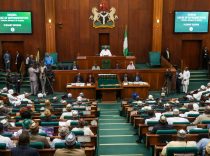
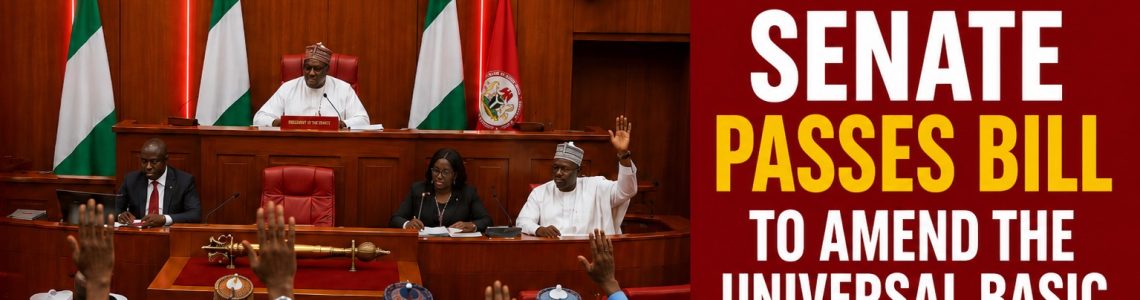
The Senate has passed a Bill to amend the Compulsory, Free Universal Basic Education and Other Related Matters Act. The Bill, which consolidates two related proposals (SBs 31 & 547) before the chamber, was passed after the Senate considered and approved the report of its Committee on Education (Basic and Secondary), chaired by Sen. Lawal Adamu Usman (APC: Kaduna) at its plenary sesiion of Wednesday, 3rd June 2026.
In the report of the Committee, Sen.Usman stated the Compulsory, Free Universal Basic Education Act of 2004 which established the Universal Basic Education Commission to coordinate the UBE programme and channel federal intervention funds to states and local governments has grown out of implementation with present-day realities noting that some provisions of the Act had become archaic and needed to be brought into conformity with current conditions.
According to Sen. Usman, the Bill amends several key provisions of the existing law. These amendments are sections 2, 3, 7, 9, and 11 of the Act, with the aim of enhancing early childhood education, regulating the appointment of members of the Commission, and ensuring that implementing agencies adhere to laid-down guidelines. On the financing of basic education which is among the most consequential of the changes, the Bill proposes raising the intervention funding from 2% to 5%.
Amendments to the Bill are as follows:
Section 2 — Right of a child to compulsory, free education The amendment revises subsections (1) to (4) to bring early childhood care, development and education within the right of a child to compulsory, free universal basic education. Currently the right covers only primary and junior secondary; the change pushes the entitlement down to the pre-primary stage. Alongside this, it widens the scope of stakeholders responsible for compliance and raises the fine for non-compliance.
Section 3 — Free services in public schools The amendment extends the “free services” guarantee to the new tier, providing for free services in public Early Childhood Care, Development and Education. It also increases the fine for non-compliance and adds the Local Government Education Authority as an enforcement authority, giving local bodies a formal role in stopping illegal fee-charging.
Section 7 — Membership of the Commission: The change is to subsection (2), the appointments clause. It substitutes the wording so that members of the Commission are appointed by the President on the recommendation of the Minister of Education, for clarity. The existing text refers simply to “the Minister”; the amendment pins it explicitly to the Minister of Education.
Section 9 — Functions of the Commission: The amendment targets paragraph (b), the funding-disbursement function. It is reworded to strengthen the Commission’s functions for swift implementation of its mandate and to ensure that grants reach states, local governments and other relevant implementing agencies.
Section 11 — Financing: The Bill increases the funding from 2% to 5%, and provides for the direct channelling of intervention funds for local government areas to their respective education sectors. In other words, the federal block grant floor rises from the current 2% of the Consolidated Revenue Fund to 5%, and LGA-bound funds are routed straight to local education, rather than only through the state board.
With the report adopted and the Bill read the third time and passed, the Senate is expected to transmit the Bill for concurrence by the House of Representatives and, ultimately, presidential assent.