The Federal Capital Territory (FCT) is facing a sharp rise in its domestic debt, raising concerns about the pace of borrowing, the sustainability of its finances and whether adequate constitutional oversight has been exercised over loans incurred in recent years.
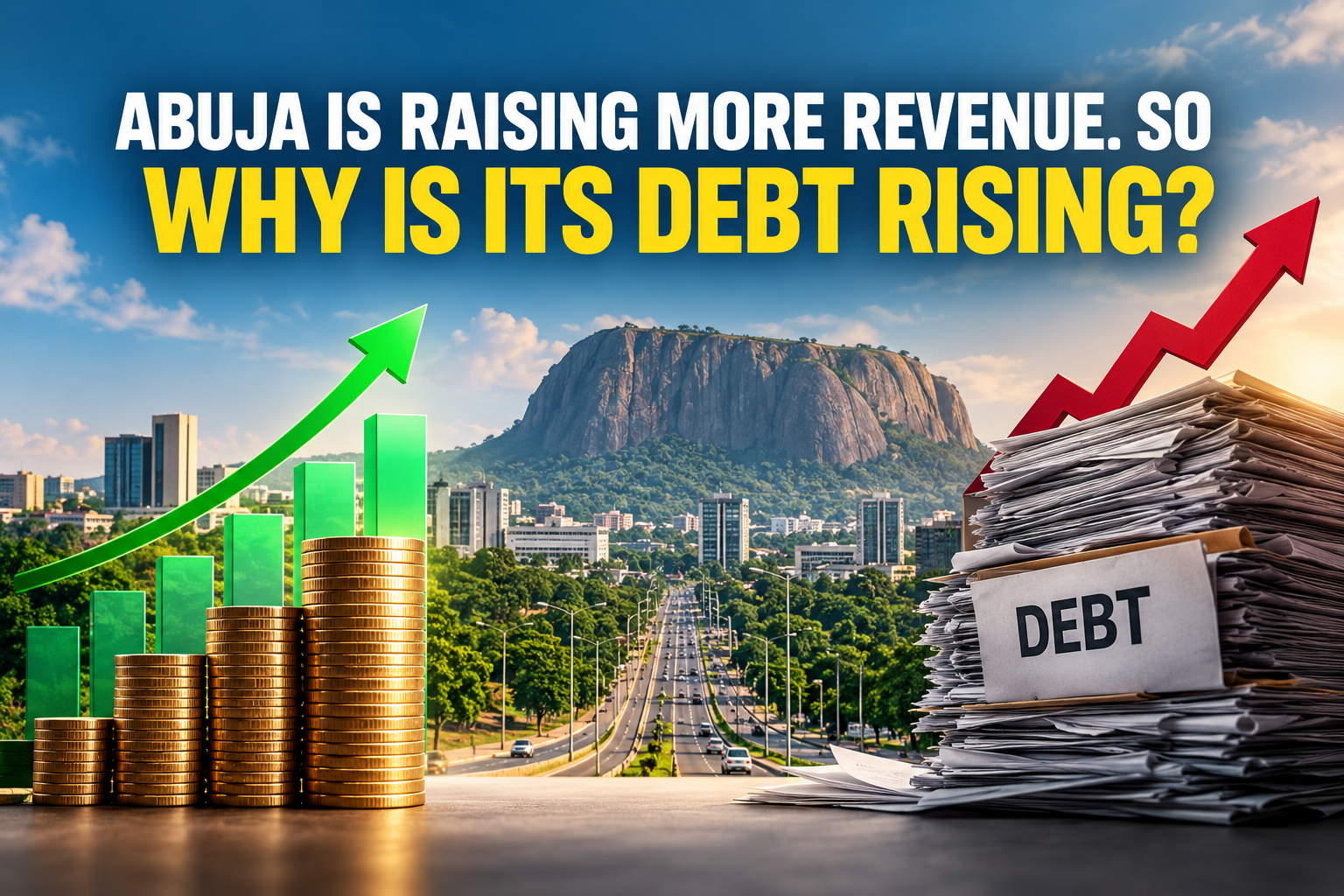
Data published by the Debt Management Office (DMO) Nigeria show that the FCT’s domestic debt stock rose from ₦88.51 billion in September 2023 to ₦389.88 billion by March 2026. This represents an increase of approximately ₦301.37 billion, or 340.5 per cent, in about two and a half years.
The increase in borrowing has taken place alongside growth in the Territory’s internally generated revenue. According to the National Bureau of Statistics, the FCT generated ₦211.10 billion in revenue in 2023, rising to ₦282.36 billion in 2024, with ₦263 billion coming from tax revenue alone.
Although the official full-year figure for 2025 has not been released, the FCT Administration reported that ₦43.8 billion was generated in January 2025, while the FCT Minister stated in July 2026 that the Territory was collecting more than ₦40 billion monthly, indicating a further increase in revenue.
With the Territory’s revenues increasing, the question is why a Territory with growing revenues continues to assume increasing debt and what the additional borrowing is being used to achieve.
The FCT’s Fiscal Position
Public borrowing can provide governments with the resources needed to finance major infrastructure projects where annual revenues are insufficient to meet capital expenditure.
The FCT has substantial infrastructure needs arising from population growth and urban expansion, including demand for roads, water, sanitation, transportation, healthcare and other public infrastructure.
The extent to which borrowing is needed to meet these demands, however, is also shaped by the Territory’s capacity to generate revenue.
The FCT has developed significant sources of internally generated revenue, particularly through land administration. These include the allocation and processing of Certificates of Occupancy (C of O) and the collection of outstanding land bills.
As part of the FCT Administration’s reforms, the fee for issuing a standard C of O was fixed at a uniform rate of ₦3.5 million per plot, adding to the revenue available to the Territory.
Furthermore, the FCT has its own internal revenue service, separate from the federal revenue authorities, and is no longer subject to the Treasury Single Account (TSA) following a Federal Government decision under President Bola Ahmed Tinubu’s administration.
The Territory therefore has greater control over the revenue it generates, giving it a substantial internally generated revenue base alongside other sources of public funding.
Borrow Today, Citizens Pay Tomorrow
The rise in the FCT’s debt makes spending decisions more important because every new expenditure has to be considered alongside the obligations created by borrowing.
The 31-day project commissioning exercise held between June and July 2026 is one example of public expenditure at a time when the FCT’s debt is rising, making the cost of such expenditure relevant to how the Territory manages its existing and future financial obligations.
Loans contracted by an administration have to be repaid from future public revenues, meaning that as debt increases, a growing share of the FCT’s resources may be committed to debt servicing and become unavailable for other government priorities.
Where these financial pressures affect the government’s ability to meet essential public needs, residents feel the consequences, which can impact the protection of constitutionally guaranteed rights, including the rights to dignity and life.
Who Holds Abuja Accountable?
The FCT’s legislative structure has direct implications for accountability over its finances, with Section 299(a) of the Constitution of the Federal Republic of Nigeria 1999 (as amended) vesting legislative powers in the National Assembly in respect of the Territory.
Consequently, when the FCT seeks to incur debt, the National Assembly ought to oversee the borrowing process and the subsequent utilisation of public resources.
Relatedly, the DMO’s External and Domestic Borrowing Guidelines require a National Assembly Resolution for the FCT’s domestic and external borrowing, with details of the proposed loan, its purpose, terms, and repayment arrangements, while external borrowing also requires the approval of the FCT Executive Committee.
Because borrowing creates obligations to be met from public revenues, fiscal accountability requires a clear connection between debt incurred, expenditure undertaken, and services delivered.
The FCT Administration should provide the public with clear information on loans contracted, lenders, repayment periods, projects or programmes financed, and the costs and funding sources of major public expenditure, allowing the Territory’s debt stock to be assessed alongside the use of borrowed and internally generated resources.
The FCT’s growing revenues, rising debt and expanding expenditure all involve public resources, so decisions on how those resources are used should be open to scrutiny.
As Abuja continues to grow and the Territory takes on new financial obligations, residents are entitled to know how public resources entrusted to government are being spent and what financial commitments are being carried into the years ahead.