

ELECTORAL COLLEGE MODEL FOR WOMEN'S SPECIAL SEATS

Looking for historical information or previous iterations of the Bill?

The Special Seats Bill Overview

But what is the Electoral College Model, and how would women be elected to these special seats through this model?

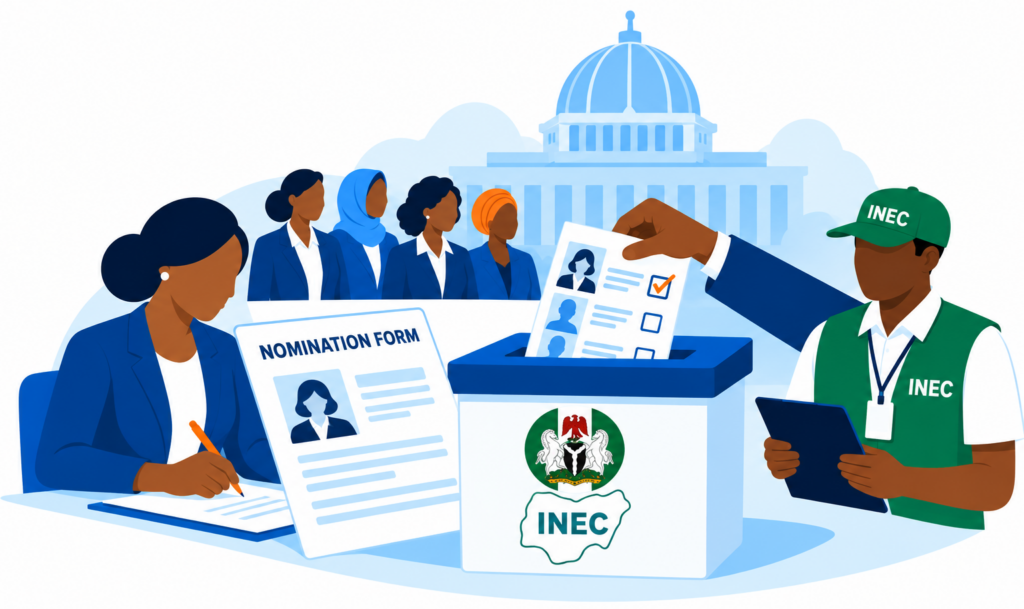
Under the proposed model, women would not be elected to the additional special seats through the general ballot; rather, political parties would nominate women candidates, while an indirect election would be conducted and supervised by

The Independent National Electoral Commission (INEC).

Who Makes Up the Electoral College?

In each State and the Federal Capital Territory, an Electoral College would be set up and would comprise:

All elected Local Government Chairpersons and their Vice-Chairpersons;

All elected Local Government Councilors

All members representing constituencies in the State House of Assembly

All members of the House of Representatives from the State
All Senators representing the State.


Every member of the Electoral College would have one vote.

How Many Seats Are Proposed?

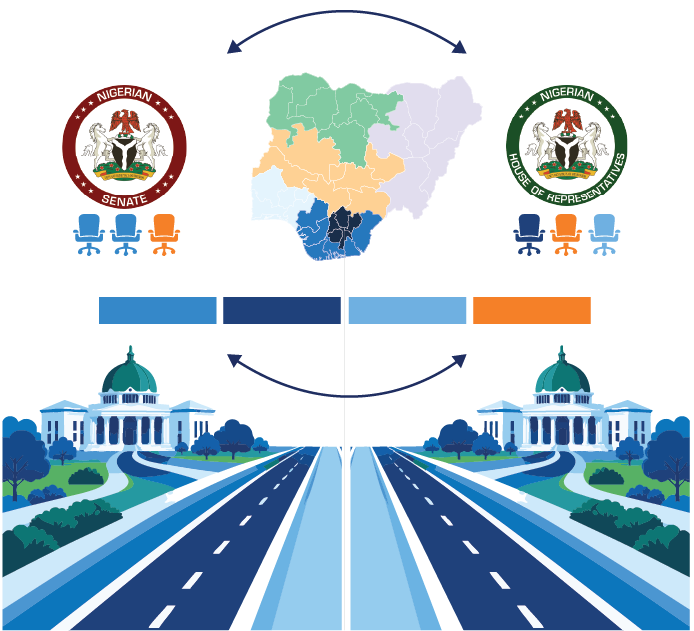
157

additional legislative seats are proposed for women.

12

additional Senate seats — two each from the six geopolitical zones.

37

additional seats are proposed, one additional woman representative from each State and the Federal Capital Territory.
108

additional seats in the State Houses of Assembly
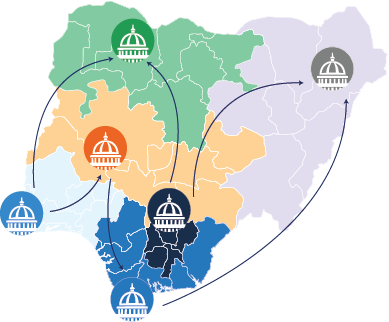
It is important to note that the Special Seats for the Senate would be filled on a rotational basis among States within each geopolitical zone.

How Would The Election Work?

Political parties nominate women candidates.

The Electoral College is constituted.

INEC conducts the election and Members of the Electoral College vote

The successful candidates are declared elected.


Note that representatives elected under the proposed Special Seats remain subject to usual recall and legislative accountability processes as stipulated under the Constitution
Likewise, women elected to these seats are entitled to the same privileges as legislators occupying regular constituency seats.
So, to reduce cost, the Electoral College Model is a proposed system of indirect election designed to create an additional pathway for increasing women’s representation in Nigeria’s legislative institutions.
Finally, the proposed seats are temporary, with House of Representatives and State House of Assembly seats to be reviewed after 16 years or four election cycles, and Senate seats after the prescribed rotational cycle.

Key Issues for Consideration

Democratic legitimacy

YES

Transparency of the electoral college process

YES

Inclusiveness and fairness

YES

Party nomination procedures

YES

Accountability of elected representatives

YES

Effective participation of women aspirants

YES

Take Action

To learn more about the Electoral College Model
Scroll to Top