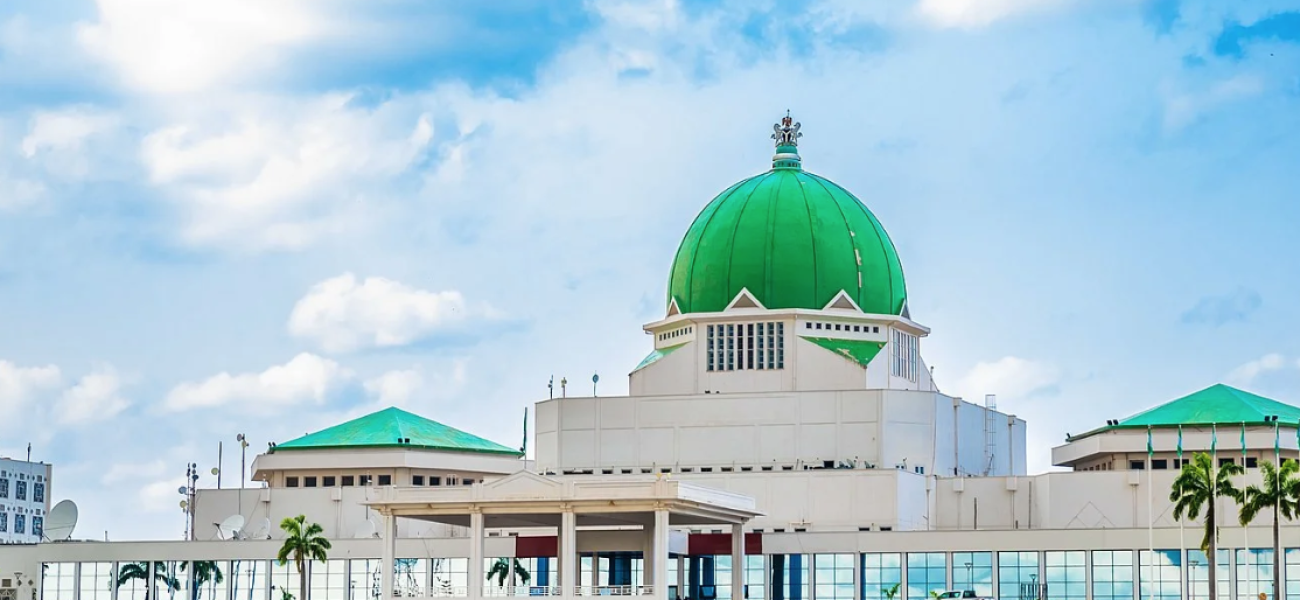
Since June 2023, Nigeria’s National Assembly has been on recess for nearly 6 in every 10 days. As political season approaches, the risk is that governance disappears entirely from the legislative calendar.
| 581 Days on recess since June 2023 ,out of 1,003 | 57.9% Proportion of time the Assembly has been off work | 17 Sitting days in all of January–March 2026 |
A Legislature More Absent Than Present
The 10th National Assembly has spent more time on recess than in session since its inauguration on 13 June 2023. Out of 1,003 calendar days, lawmakers were in plenary for just 422 days, barely four out of every ten. The remaining 581 days were spent away from the chambers. That is not a scheduling inconvenience. It is a structural crisis.
This pattern is not evenly distributed across the years. It has been getting progressively worse.
| Year | Sitting Days | Required (S.63) | Shortfall | Recess Rate |
| 2024 | 173 | 181 | −8 days | — |
| 2025 | 141 | 181 | −40 days | 61.3% |
| 2026 * | 17 | 181 | TBD | 77.1% |
* As at 31 March 2026. 2026 figure covers January–March only.
2025 stands out as the worst year on record. With only 141 sitting days, the Assembly fell 40 days short of the constitutional minimum ,spending 61.3% of the year away from chambers. 2026 is on course to be worse still: by the end of March, lawmakers had sat for just 17 days out of a possible 90, leaving a recess rate of 77.1%.
“Section 63 of the 1999 Constitution is unambiguous: the National Assembly must sit for not less than 181 days in a year. To meet that requirement in 2026, lawmakers must now sit for at least 165 more days between April and December ,out of just 274 remaining.“
More Than 20 Recesses. Most With Little Justification.
Since inception, the Assembly has taken over 20 recesses ,many extended beyond their original timelines, and some overlapping in ways that beggar belief. Easter breaks, Sallah breaks, constituency breaks, and oversight breaks have stacked atop one another to the point where continuous plenary work is the exception, not the rule.
On at least one occasion, lawmakers resumed plenary and adjourned the same day, turning what should have been a return to work into a procedural formality. The most recent recess, which began 12 March 2026 for Ramadan and Eid, was planned to end on 31 March. But resumption now bumped immediately into Easter, which in turn rolls into party primary season from April to May.
Nigeria is entering a window where legislative work risks being wholly displaced by political campaigning.
The Cost Is Already Visible
The consequences of this recess culture are not abstract. They are embedded in delayed laws, stalled reform, and weakened oversight:
• Before its passage,the 2026 Appropriation Act remained under consideration months into the fiscal year, undermining budget implementation and economic planning.
• Constitutional reform proposals expected to conclude by December 2025 have slipped significantly, with key amendments still unresolved.
• Legislative output has been fragmented ,short, irregular sittings are producing reactive, piecemeal laws rather than comprehensive reform.
• Executive oversight, arguably the legislature’s most important function, has been steadily eroded as lawmakers spend less time in formal session.
To meet the constitutional 181-day minimum for 2026, the Assembly would need to maintain an unprecedented level of disciplined, uninterrupted sitting for the rest of the year. Nothing in its recent history suggests it will.
A Dangerous Normalisation
What makes this pattern especially alarming is how normalised it has become. Frequent recesses are no longer treated as deviations ,they are anticipated. Extensions are expected. Underperformance is tolerated. Gradually, the public and press have adjusted their expectations downward.
That adjustment is exactly the wrong response. A legislature that sits intermittently, reacts rather than leads, and disappears when political season arrives is not fulfilling its constitutional role. It is abdicating it.
“The 10th National Assembly still has time to reverse this trajectory, but only if it treats the remainder of 2026 with the urgency the moment demands. A clear, published legislative calendar, strict limits on recess periods, and a firm commitment to completing pending national business before elections consume the agenda are the minimum starting point. Public office is a full-time responsibility. The calendar must reflect that.“