
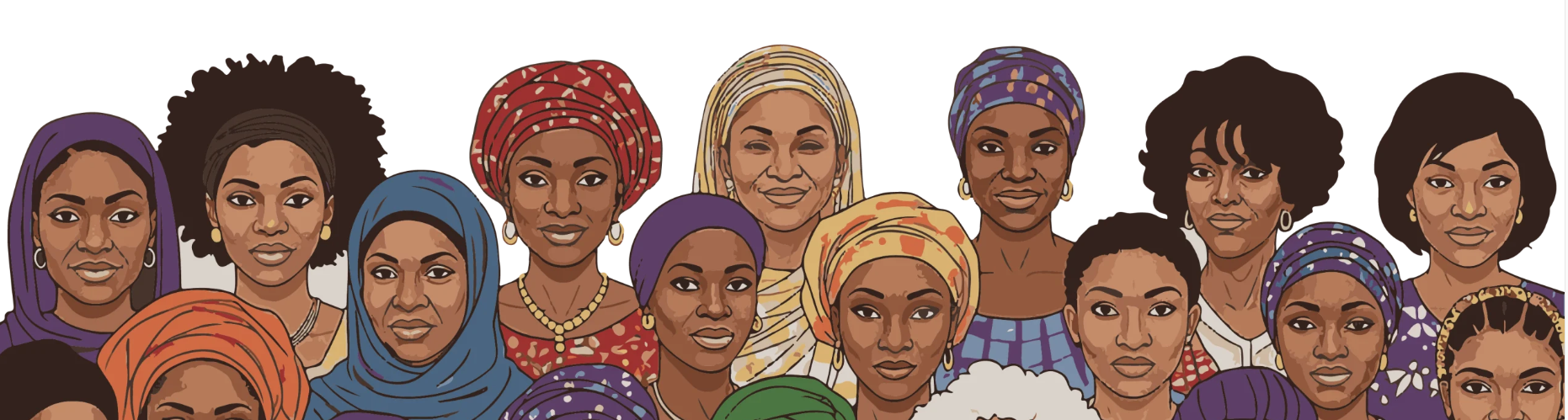
Nigeria ranks among the worst performers globally on women’s legislative representation. The Special Seats Bill offers the most credible structural remedy yet, but the Assembly’s track record on gender reform offers little grounds for optimism.
| <5% Women’s share of seats in the National Assembly | 37 Additional Senate seats would create for women | 37 Additional House seats proposed under the same bill |
The Same Conversation, Year After Year
International Women’s Day on 8 March once again shone a spotlight on the near-total exclusion of women from Nigeria’s legislative chambers. Civil society organisations, advocacy coalitions, and women legislators used the occasion, and the momentum of Women’s History Month, to push hard for the passage of the Special Seats Bill before the current Assembly’s reform window closes.
The bill is one of approximately 43 constitutional amendment proposals before the National Assembly. It proposes the creation of reserved legislative seats that can only be contested by women: 37 additional seats in the Senate, 37 in the House, and three per State House of Assembly ,a total of 108 new seats at the subnational level.
These are additional seats, not replacements. Existing constituencies are untouched. The proposal is designed as a temporary special measure, to be reviewed after four electoral cycles, intended to create structural pathways into political office that the existing system has consistently failed to open.
Even if every proposed seat were created, women’s representation in the National Assembly would reach only 13.6% ,a figure its own advocates describe as a floor, not a ceiling.
The Record Nigeria Must Confront
Nigeria’s representation numbers are not merely modest ,they are a democratic embarrassment by any comparative standard. Fewer than 25 women sit among 469 federal lawmakers, a proportion that places Nigeria in the lowest tier globally. In several State Houses of Assembly, there are no women at all.
This is not for lack of trying. The Special Seats Bill is not the first gender equity proposal to reach the National Assembly. A succession of bills over the past decade ,the Gender and Equal Opportunities Bill, various Women’s Quota proposals, affirmative action provisions in earlier constitutional review processes ,have all been rejected. The most notorious defeat came in 2021, when lawmakers voted down gender equity provisions while offering reasons that drew widespread condemnation.
Why This Bill, and Why Now?
The case for reserved seats is not simply moral ,though it is that. It is practical. Countries that have adopted similar mechanisms have produced measurable, lasting gains in women’s participation. Rwanda’s 61% women’s representation did not arise spontaneously; it was built on a constitutional quota framework. Uganda, Tanzania, Kenya, and Senegal have all used variants of reserved seats to shift the composition of their legislatures.
Research commissioned for the 2025 constitutional review process estimates that increasing women’s legislative representation to meaningful levels could add as much as 23% to Nigeria’s GDP over time ,unlocking roughly $229 billion in economic value. A one-percent increase in the national budget to fund the additional seats would be, by any measure, an exceptional return on investment.
The counterarguments ,that reserved seats undermine merit, increase legislative costs, or distort electoral competition ,have been addressed extensively and found wanting. Seats reserved for women are contested seats; candidates must still win them. The concern about costs, meanwhile, is difficult to sustain when it is rarely raised about other legislative expenditures of far greater and less defensible scale.
The Window Is Closing
With the 2027 general elections scheduled for February 2027 and party primaries expected to begin as early as April 2026, the constitutional amendment process must reach a conclusion imminently if any reform is to take effect before the next electoral cycle. Passing an amendment after the election timetable is set would not help women running in 2027.
This is the moment. The National Assembly’s constitutional review process is in its most active phase. Voting will soon commence. The political appetite for reform ,at least rhetorically ,exists. What is less certain is whether the majority of male lawmakers who would need to vote for a bill that creates space for their potential future competitors will actually do so.
PLAC calls on every member of the National Assembly to support the Special Seats Bill when it comes to a vote ,and on State Houses of Assembly to begin preparing for voting as well. Nigeria’s democratic credibility, its economic potential, and the aspirations of more than half its population are tied to the outcome of this vote.