
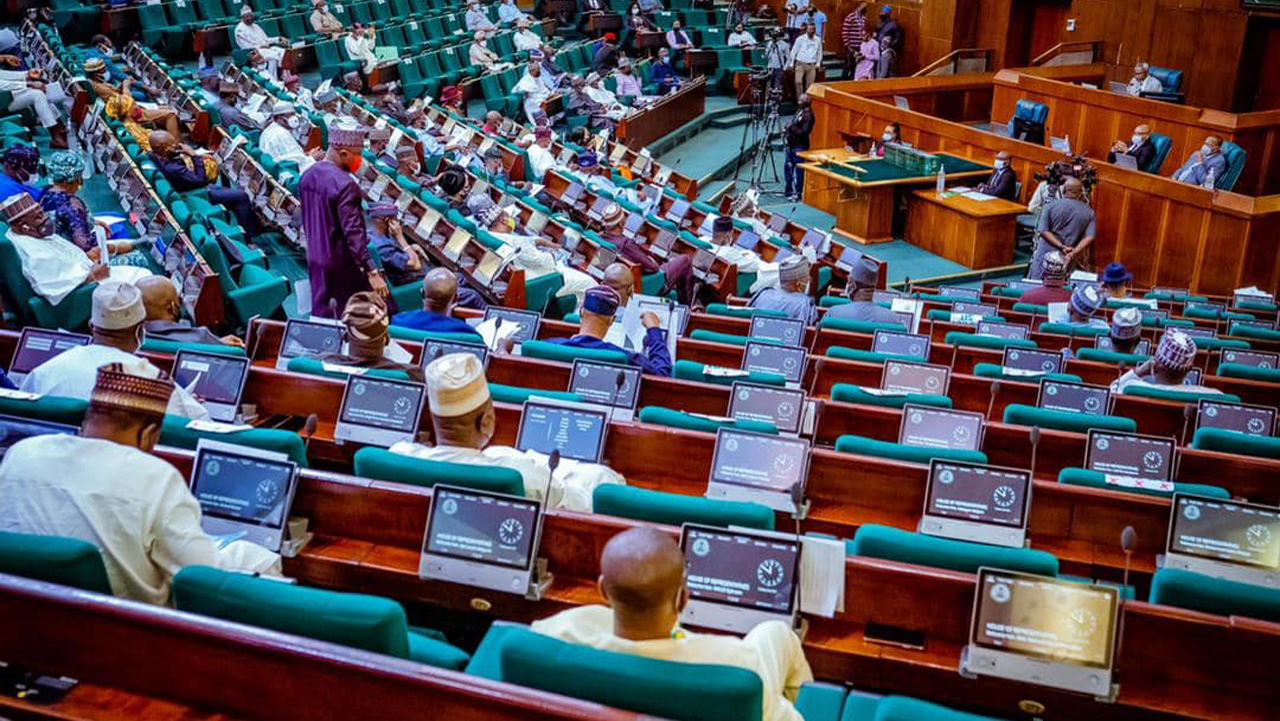
The House of Representatives passed a law criminalising dual party membership in a single sitting, ₦10 million fine or two years in prison. It was swift, it was bold, and it may not survive a constitutional challenge.
| 1 Day to pass all three readings ,11 March 2026 | ₦10m Maximum fine for dual party membership on conviction | 2 yrs Maximum custodial sentence, or both penalties combined |
On Wednesday, 11 March 2026, the House of Representatives did something unusual even by the standards of a legislature that occasionally moves quickly when it chooses to: it took a bill through first reading, second reading, full committee stage as a Committee of the Whole, and third reading ,all in a single plenary session. What took most legislation weeks or months was done in hours.
The bill amends the Electoral Act 2026, itself only recently signed into law, to introduce an explicit prohibition on dual party membership. The speed was deliberate. With party primary season approaching and INEC’s membership register deadlines already set, the House leadership clearly wanted the law in place before politicians had a chance to manoeuvre around it.
“The amendment inserts three new subsections into Section 77 of the Electoral Act ,the provision governing political party membership conditions. The core rule is simple: a person shall not be registered as a member of more than one political party at the same time. Where dual membership is discovered, both registrations are voided. The person ceases to be a member of any party until they regularise their position.“
What the Law Actually Says
The penalty for deliberate dual membership is severe: a fine of up to ₦10 million, a maximum prison term of two years, or both. The emphasis on knowledge and intent is significant. The provision is not designed to catch clerical errors; for example individuals whose names are accidentally duplicated on two party registers due to administrative overlap is not expected to incure criminal liability. The bill targets deliberate double registration: politicians who maintain a foot in two camps ahead of primary season to maximise their options.
If this becomes law, enforcement will rest largely with INEC, which already receives party membership registers before primaries. Where a name appears in more than one register, the commission will be expected to flag the duplication. What happens next such as notification, opportunity to regularise, referral for prosecution, will need to be spelt out by INEC via regulations.
The Proposal is designed to punish a very specific kind of political opportunism. It however raises the question of whether implementation can avoid unintended consequences for innocent actors.
The Constitutional Fault Line
The bill did not pass without dissent, and the objections raised on the floor were substantive rather than procedural. Two separate constitutional concerns were aired during debate.
The first goes to the heart of the penalty structure. Section 40 of the 1999 Constitution guarantees every Nigerian the right to freedom of association, which has generally been understood to include the right to join a political party. A provision that not only prohibits dual membership but also strips the offender of membership in both parties simultaneously, arguably does more than restrict that right. It suspends it entirely.
The second concern was more procedural. An alternative approach proposed during debate would have required INEC to notify a dual member within 21 days of discovery, giving the individual 14 days to choose a single party and retain standing. This graduated mechanism – notify, pause, choose – would have achieved the same anti-double-dealing objective while providing a due process cushion. It was rejected in favour of the harder, immediate approach.
“Whether Section 40 ultimately bars this amendment is a question for the courts. Nigeria’s judiciary has generally interpreted freedom of association in a manner that permits reasonable regulation of the right ,but the total voiding of both memberships is an unusual step that sits in genuinely contested constitutional territory. Litigation is foreseeable if the proposal becomes law.“
The Paradox Nobody Has Missed
There is an irony that observers have been quick to note. The very legislature that passed a law criminalising dual party membership on 11 March 2026 saw 27 of its members announce party defections on 31 March, just twenty days later. defection is not dual membership. When a politician defects, they formally leave one party before joining another, so they are not a member of both at the same time. But in reality, frequent defections, while technically different, reflects a similar kind of fluid party loyalty. The Assembly, is moving to criminalize one form of opportunism, while another closely related behaviour remains common and political acceptable.
The amendment is also landing in a context where the parent Electoral Act 2026 itself remains contested. Opposition parties have raised objections to other provisions ,particularly those governing results transmission and party primary procedures. Whether a Senate that is navigating those objections while managing its own internal political dynamics will pass the amendment quickly, modify it, or sit on it remains to be seen.
What Happens Next
The bill now awaits Senate concurrence. If passed as is, it goes to the President for assent. If the Senate amends it, a harmonisation process follows. The timeline matters: INEC’s membership register submission deadlines for the 2027 election cycle are already approaching, and a law that is still in legislative transit when primaries begin will be difficult to enforce for the current cycle.
PLAC will continue to monitor the bill’s passage through the Senate and engage with stakeholders on the implementation framework. The underlying objective ,reducing the political opportunism that has made party membership registers unreliable ,is legitimate and necessary. The test is whether the mechanism chosen to achieve it can withstand the scrutiny it will inevitably face.