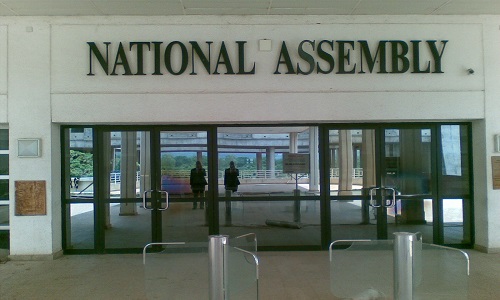
The National Assembly has resumed plenary sittings after an unusually long end-of-year recess, returning to a legislative agenda burdened by several unresolved national priorities. When lawmakers adjourned in December 2025, they left behind a trail of unfinished business that now demands urgent attention if Nigeria is to avoid avoidable governance, legal, and electoral crises.
At the forefront of these pending issues is the stalled Electoral Act (Amendment) Bill. Despite the House of Representatives concluding its legislative work on the Bill before the recess, the National Assembly failed to complete the process before adjourning. With the 2027 General Elections expected in February 2027 and the Independent National Electoral Commission (INEC) already within the statutory window to issue notices of election, continued delay threatens electoral preparedness, legal certainty, and public confidence in the democratic process.
Equally pressing are the Constitution Alteration Bills currently before both chambers of the National Assembly. Joint Constitution Review Committees of the Senate and House of Representatives have worked for months to develop far-reaching proposals addressing long-standing governance challenges. These include devolution of powers, electoral and judicial reforms, state policing, human rights, state creation, and gender inclusion. Of particular national significance is the Special Seats Bill for women, which civil society organisations (CSOs) regard as a transformative opportunity to correct Nigeria’s severe gender imbalance in political representation. For many stakeholders, passage of this Bill would stand as the most consequential constitutional reform achievement of the 10th National Assembly.
The length of the National Assembly’s recess itself has drawn sustained criticism from CSOs and governance advocates. Comparisons have been made with legislative practice in other democracies where parliaments reconvene shortly after the New Year, especially when urgent national matters are pending. Critics argue that the extended break conveyed a troubling lack of sensitivity to Nigeria’s pressing governance and security challenges.
These concerns were heightened by international developments during the recess. Nigeria faced renewed diplomatic tension following remarks attributed to U.S. President Donald Trump and the designation of Nigeria as a “Country of Particular Concern (CPC).” At the same time, worsening insecurity across several parts of the country continued to exact a heavy toll on lives and livelihoods. Yet there has been no public indication that the leadership of the National Assembly initiated high-level parliamentary engagement with its counterpart, the U.S. Congress, to address security cooperation or the implications of Nigeria’s CPC designation. Many Nigerians expected the legislature to assert a more visible leadership role during this period.
Another issue casting a shadow over the resumption of legislative business is the controversy surrounding Nigeria’s recently enacted tax reform laws. Opposition lawmakers, led by Hon. Victor Afam Ogene and Hon. Abdussamad Dasuki, have alleged that provisions passed by the National Assembly were altered before the Acts were gazetted and signed into law. Specific claims include the alleged omission of provisions relating to petroleum income tax and Value Added Tax (VAT), the removal of reporting requirements obligating the Nigeria Revenue Service to report to the National Assembly, and changes to the currency basis for tax calculations in petroleum operations.
Although the National Assembly has stated that the law has since been “re-gazetted,” legal experts and civil society observers note that Nigerian legislative practice does not recognise any procedure allowing for the re-gazetting of a law already assented to by the President. This has raised serious questions about legislative transparency, procedural integrity, and the legal certainty of the new tax regime.
In response, the leadership of the House of Representatives has rejected allegations of tampering, describing them as misleading. In a statement issued by the House spokesperson, the leadership maintained that the tax reform bills were thoroughly debated, harmonised, and duly passed by both chambers before transmission to the President for assent. It insisted that all amendments were properly captured in the versions approved during plenary. Nonetheless, the controversy underscores the need for clearer explanations and greater openness to restore public trust.
Compounding these challenges is the 2026 Appropriation Bill, presented by President Bola Ahmed Tinubu on the final sitting day of 2025, leaving no opportunity for scrutiny or debate before lawmakers proceeded on recess. This comes against the backdrop of the unprecedented rollover of the 2024 Budget, the virtual non-implementation of the 2025 Budget, and widespread frustration among legislators over persistent delays in budget execution.
Despite repeated complaints by lawmakers about poor implementation of previous budgets, the National Assembly has yet to deploy its constitutional oversight and sanctioning powers to hold the executive accountable. Meanwhile, a significant portion of constituency projects remains unfunded, with contractors unpaid. Towards the end of 2025, some legislators openly threatened to boycott legislative activities and encouraged contractors to protest at the Federal Ministry of Finance and the National Assembly complex.
As the National Assembly resumes, Nigerians will be watching closely. The early weeks of plenary sittings present a critical opportunity for lawmakers to demonstrate urgency, seriousness, and institutional leadership. Completing electoral reforms, advancing constitutional amendments—especially the Special Seats Bill—resolving the tax law controversy, and restoring credibility to the budget process are not optional tasks. They are urgent national imperatives.
How the National Assembly responds to these challenges will shape public confidence in the institution and significantly influence its legacy ahead of the 2027 General Elections.